
What Do We Know about Amtrak’s Safety Record?
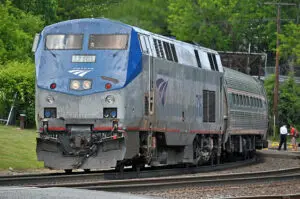 Amtrak provides nationwide passenger train transport in the United States, including service to a number of locations in the New York area. After a recent crash in Philadelphia, however, many riders are wondering just how safe Amtrak’s passenger service is. The Washington Post recently released an article summarizing Amtrak safety data gathered by the Federal Railroad Administration.
An overall view of Amtrak’s accident rate per 1 million passenger miles shows that the number of accidents has been dropping in recent years. In 2012, 2013, and 2014, Amtrak experienced fewer than 2 accidents per 1 million passenger miles – a rate considerably lower than the rate of other types of travel accidents, like motor vehicle crashes. The number of derailments of Amtrak trains each year has also dropped, from an average of 80 in 2000 to an average of 28 in 2014.
Why Are Fatal Construction Accidents on the Rise in NY?
As reported by the New York Times, there has been a notable rise in the number of construction-related accidents, injuries, and deaths occurring throughout NYC. From workers falling through faulty scaffolding to floors collapsing during routine demolition, there are plenty of serious dangers that NY construction workers must contend with on a daily basis.
However, a recent incident, in which a 12-ton heating and air-conditioning unit plummeted 30 stories from a crane to Madison Avenue, illustrates the growing problem perfectly. Construction accidents are a real danger that should not be ignored.
Investigators Look into Engineer’s Cell Phone Records as Injured Amtrak Passengers Plan Lawsuit
 Federal investigators looking into a recent Amtrak train accident have turned their attention to the cell phone records of the engineer who was responsible for driving the train when it crashed.
Although their investigation has revealed that the engineer did text and participate in phone calls on the day of the crash, investigators have not yet said whether any of those messages were received or sent while the train was in motion. They are currently matching the data in the cell phone records to data in the locomotive’s event recorder, its video stream, recorded radio communications, and other surveillance videos to see if any messages can be pinpointed to specific moments in the events leading up to and including the crash. The engineer has said that he does not remember the events of the crash.
Increase in Construction Accident Deaths Prompts Unions to Step Up
 The recent New York City Occupational Safety and Health (NYCOSH) report “The Price of Life: 2015 Report on Construction Fatalities in NYC” brought to light some alarming statistics on workplace safety for the city’s many construction workers. It also specifically highlighted the role that unions play in making construction workplaces safer.
The report tracked OSHA violation reports for both union and non-union sites. It found that of the 31 construction sites listed on OSHA’s Severe Violator Enforcement Program (SVEP) list, 28 of them were not unionized. Twenty-three of the 28 non-union sites made the list with two or more “willful or repeated” violations of safety regulations in a single inspection. One non-union site, the report noted, racked up “an extraordinary 41 violations.”
New Report Sheds Sobering Light on Construction Accident Deaths in New York
 A new report, “The Price of Life: 2015 Report on Construction Fatalities in NYC,” was released last week. Intended as an update to the New York Occupational Safety and Health (NYCOSH) 2014 report “It’s No Accident,” the report provides a sobering view of the state of construction accidents and construction workplace safety in New York City.
Here are just a few of the highlights from the recent report:
Amtrak Derailment in Philadelphia Raises Concerns over Compensation Cap
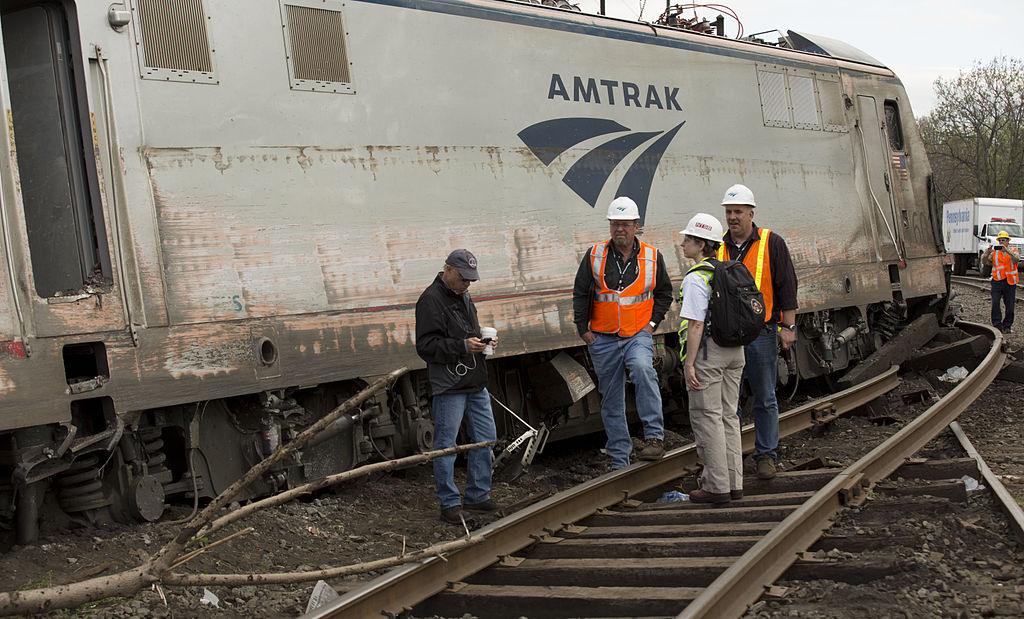 Over 200 passengers were injured and eight were killed when an Amtrak train headed for New York from Washington D.C. on May 12, 2015 derailed in Philadelphia, overturning six of the seven cars. Eight passengers were killed and six were taken to nearby hospitals in critical condition.
The majority of those injured were fortunate enough to escape from the twisted wreckage with only minor physical injuries; however, survivors and family members alike may be faced with untold psychological and emotional repercussions for years to come.
As Amtrak seeks answers regarding the derailment, survivors of the tragic rail accident are taking legal action to resolve questions of their own, such as, “How can I afford such overwhelming medical expenses and other economic losses as a result of the crash?”
Kenneth Halperin’s Work for the City Bar’s Cancer Advocacy Project
 When not handling personal injury cases as a partner of Wingate, Russotti, Shapiro, Moses & Halperin, LLP, attorney Kenneth Halperin volunteers with the City Bar Justice Center’s Cancer Advocacy Project (CAP) – a non-profit 501(c)(3) that provides pro bono legal services to individuals who might not otherwise receive the legal guidance they need due to financial straits.
The City Bar is an affiliate of the New York City Bar Association that provides numerous avenues for attorneys and legal experts to give back to the community, creating a valuable resource for information and assistance for those who may have difficulty affording quality legal representation. The Cancer Advocacy Project, in particular, helps cancer patients, survivors, their families, and caregivers in the following areas:
$1 Billion Loan Approved for LIRR, Metro-North Safety Updates
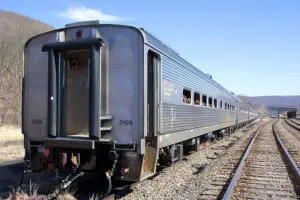 Metro-North and LIRR will share a federal loan of nearly $1 billion dollars for safety updates aimed at cutting down on train accidents and making the two lines models of high-tech railroad safety nationwide, according to a recent article in the Hartford Courant.
Regulators with the Federal Railroad Administration say that the “positive train control” system uses GPS technology to help trains avoid collisions. Although Congress gave the FRA seven years, with a deadline of 2015, to install the equipment in all passenger and freight lines currently operating in the United States, the agency has not had the funding or resources to meet the deadline.
Widow Sues Metro-North for Fatal Train Collision
 On February 3, 2015, a tragic train-SUV collision in Valhalla, New York took the lives of six people. Now the widow of one of the victims is planning to sue Metro-North, the town of Mount Pleasant, and Westchester County for $25 million.
According to the claim filed on behalf of the widow, her husband suffered severe burns, lacerations, and other physical trauma in the fiery crash. The notice of intent, filed on April 29, alleges that he experienced pain and suffering prior to his death.
The claim also alleges that Metro-North neglected to:
- Provide adequate lighting and safe crossing gates
Would Gates Help Protect New York Riders from Subway Accidents?
 Approximately one death per week occurs in the New York subway system, according to MTA statistics. In 2013 alone, 151 people were struck by trains, resulting in 53 deaths. The financial costs of these accidents are staggering, and the emotional and personal costs can be immeasurable.
In late 2013, the MTA launched a pilot program to examine various “track intrusion” detection systems that would alert MTA staff if a person or object was on the tracks. Some of these systems rely on highly sophisticated technology, and supporters argue that their value in protecting lives is worth the cost of installing them in every subway terminal. Opponents, however, note that many of these technological systems have one major flaw: they don’t warn trains in time for operators to hit the brakes.