
Who Counts as an Employee Under New York Workers Compensation Law?
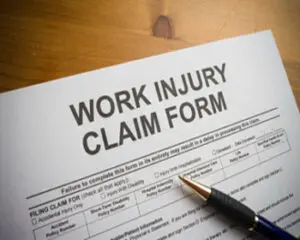 In New York, employees who are injured on the job or who contract a work-related illness are covered by workers’ compensation insurance. Workers’ comp pays for a wide range of medical bills, and in cases of serious injury, may also replace portions of lost wages or pay for rehabilitation and job retraining.
Only “employees” are covered under New York workers’ compensation law. Independent contractors are not covered. While there are no set rules for determining who is and is not an employee, the New York Workers’ Compensation Board (WCB) provides a list of criteria for determining who is likely an employee – a question that matters a great deal if you have been injured on the job.
Tips for Safer Train Travels
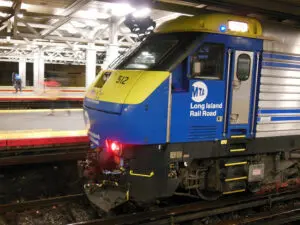 Statistically, trains are safer for passengers than vehicles – but accidents and injuries can still occur. You can help yourself and your fellow passengers stay safer when riding on rail systems by keeping several safety tips in mind.
Crane Accident Demonstrates the Risks of Working on Construction Sites
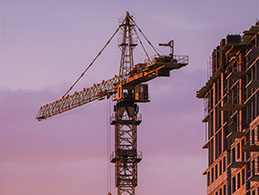 A recent crane accident on a New Jersey construction site demonstrates that while cranes can be indispensable for working on large projects, they also pose serious risks when proper safety precautions are not taken.
Study Examines Biggest Risks in Subway Travel
 A study published in the Journal of Urban Health examines the safety risks of traveling on subway lines. With 7 million passengers each day taking a total of 1.7 billion rides annually, New York has the largest metro system in the United States and the seventh largest in the world. Safety on the city’s subway transit lines is a major concern for New Yorkers and for all who visit the city.
New York City Provides Month by Month Overview of Construction Site Accidents
 New York City’s Buildings Department provides detailed monthly reports available at its website for interested residents and construction site accident lawyers concerned about the rate of serious injuries and deaths on the city’s many buildings projects. The information available includes statistics drawn from the construction-related accident reports filed each month with the city.
Rail Accidents By the Numbers
 Statistically, rail remains one of the safest ways to travel in the United States – but that doesn’t mean railways are accident-free. Staff errors, aging tracks and equipment, inclement weather, and other problems may all cause or contribute to a train accident.
Experienced NY train accident attorneys take care to follow railway safety statistics, like these numbers from the U.S. Department of Transportation’s Bureau of Transportation Statistics (BTS):
Federal Wage and Hour Violations Increase in Recent Years According to Department of Labor
 The number of federal wage and hour violations, as well as the amount of back wages being unfairly withheld, has increased over the past several years, according to statistics from the U.S. Department of Labor (DoL). Since wage and hour disputes are among the most common types of labor disputes, experienced New York construction union attorneys keep a close eye on these numbers as a way to track whether enforcement and education efforts are working.
According to the Wage and Hour Division (WHD) statistics on enforcement, in 2009, employers found guilty of wage and hour violations paid back wages of over $172 million. In 2010, that number jumped to $176 million, and by 2014, employers were paying over $240 million in back wages to over 270,000 employees.
Recovering from a Catastrophic Work Accident
 Whether you work in a small office or work long shifts on major construction projects, your employer is required to follow the Occupational Safety and Health Administration’s (OSHA) regulations when it comes to preventing work-related accidents. In 2013 alone, roughly 4,585 workers lost their lives due to workplace accidents and thousands more suffered serious or even catastrophic injuries on the job.
While OSHA reports that the 2013 statistics for work injuries and deaths are, in fact, the second-lowest since 1992, many of these tragic incidents could have been prevented, if it weren’t for negligence. For example, the top four causes of fatal and catastrophic injury accidents on the job are simple slip and falls, electrocution, being struck by an object, or getting pinned between two objects.
Construction Site Safety a Major Focus for OSHA in Recent Years
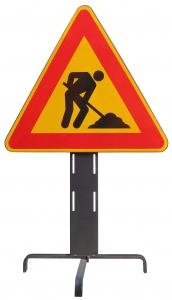 The U.S. Occupational Safety and Health Administration (OSHA) has begun compiling statistics on the most common accidents and injuries that occur on construction sites nationwide. Private construction sites accounted for 828 of the 4,585 workplace deaths suffered in the U.S. in 2013, according to OSHA. This means that construction sites were the location for one in every five worker deaths.
Just four accident categories account for more than half of construction worker deaths. OSHA calls these the “Fatal Four” and says that if these four causes were eliminated, workplaces would save the lives of nearly 500 workers every year.
Are Employees Compensated for Work-Related Car Accidents?
 Whether you work as a delivery person or have been sent out on a business errand, it is not uncommon for New York employees to get into a car accident during the course of a work day. As with all NY work-related accidents, you may file for workers’ compensation benefits if you have sustained injuries among other damages. You may also get additional financial support by filing a personal injury claim against the at-fault driver. In order to recover compensation, you must provide evidence that the at-fault driver was negligent and caused the collision.
When seeking workers’ compensation for any work-related injury, it is not necessary to prove negligence. The only thing that matters is that you were injured while performing your job duties. You can pursue financial support through workers’ comp if you were: