
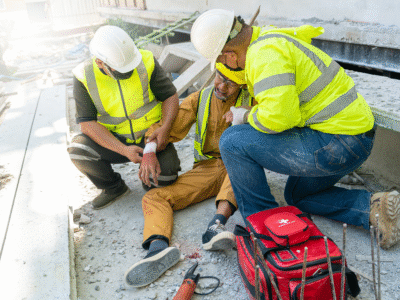
Construction sites across Staten Island are constantly active with residential builds, renovations, and public infrastructure projects happening every day. This growth creates dangerous environments where serious injuries can occur.
Among the most common incidents are construction slip, trip, and fall accidents, which are often caused by unsafe working conditions that could have been prevented. If you have been injured on or near a construction site, New York law provides powerful protection.
The Staten Island construction injury lawyers at Wingate, Russotti, Shapiro, Moses & Halperin, LLP have won over two billion dollars for our clients. We understand how to hold negligent parties accountable and pursue maximum compensation.
Why Construction Slip, Trip, and Fall Accidents Are So Dangerous
Construction sites are inherently hazardous. Workers and even passersby may encounter:
- Debris and scattered materials
- Wet or slippery surfaces
- Uneven walkways
- Poor lighting
- Improperly secured equipment
These construction site hazards can lead to serious injuries, including fractures, head trauma, spinal damage, and long-term disability.
The Difference Between Premises Liability and Construction Claims
A standard slip-and-fall case typically falls under premises liability law, which requires proving that a property owner was negligent. New York provides enhanced protections through:
- Labor Law § 200
- Labor Law § 240(1)
- Labor Law § 241(6)
These statutes create stronger legal pathways for injured individuals, often making it easier to recover compensation.
Labor Law § 200: The Foundation of Workplace Safety
Labor Law § 200 is a general safety provision that requires property owners and contractors to maintain a safe work environment. To file a successful claim under this law, you generally must show that:
- A dangerous condition existed
- The owner or contractor knew or should have known about it
- They failed to correct it
In trip-and-fall construction liability cases, this might involve failing to clean up debris, ignoring hazardous surface conditions, or allowing unsafe work practices to continue.
Labor Law § 240(1): The Scaffold Law and Elevation Risks
Labor Law § 240(1), often called the Scaffold Law, is one of the most powerful protections available to injured workers.
This law applies to accidents involving elevation-related risks, such as:
- Falls from scaffolding
- Falls from ladders
- Falling objects striking workers
In a slip-and-fall case, strict liability may apply. If proper safety equipment was not provided, the responsible parties can be held liable.
Labor Law § 241(6): Specific Safety Violations
Labor Law § 241(6) requires construction sites to comply with detailed safety regulations outlined in the New York Industrial Code. This law is particularly important in construction slip, trip, and fall cases because it addresses the everyday hazards that cause these accidents.
These claims are based on violations of specific safety rules, such as:
- Improper housekeeping, leading to tripping hazards
- Unsafe walking surfaces
- Failure to maintain clear passageways
Who Can Be Held Liable for a Construction Site Accident?
One of the most important aspects of any case is identifying who is responsible. Injured workers may be able to pursue claims against parties other than their direct employer.
In construction accidents, liability may extend to multiple parties, including:
- Property owners
- General contractors
- Subcontractors
- Drivers
- Equipment vendors
Can Non-Workers File a Claim?
Construction accidents not only affect workers. Pedestrians, visitors, and nearby residents may also be injured due to unsafe conditions. For example:
- A passerby tripping over debris on a sidewalk
- A visitor slipping on a wet surface at a construction site
Compensation Beyond Workers’ Compensation
Workers’ compensation provides limited benefits, such as medical coverage and partial wage replacement. It does not cover pain and suffering, full lost income, or long-term damages.
By pursuing a third-party claim under New York labor laws, injured individuals may be able to recover:
- Full lost wages
- Pain and suffering
- Future medical expenses
- Other damages related to the injury
The Role of Expert Testimony
Construction accident cases frequently involve technical issues that require expert analysis. Experts may include safety engineers, construction professionals, and accident reconstruction specialists. Expert testimony can help establish how the injury could have been prevented and whether safety standards were violated.
How WRSMH Approaches Construction Accident Cases
At Wingate, Russotti, Shapiro, Moses & Halperin, LLP, our strategy includes:
- Conducting thorough investigations
- Identifying all liable parties
- Leveraging New York labor laws to strengthen claims
- Working with leading experts
- Preparing every case as if it will go to trial
Speak With an Experienced Staten Island Construction Accident Lawyer
If you have been injured in a construction slip, trip, and fall accident in Staten Island, Wingate, Russotti, Shapiro, Moses & Halperin, LLP is ready to help. A third-party lawsuit may provide access to significantly greater compensation for your injuries.
Call (212) 986-7353 to set up a free consultation and learn more today.
Construction Slip, Trip, and Fall Accident FAQs
What causes construction slip, trip, and fall accidents in Staten Island?
Most accidents are caused by unsafe conditions such as debris, uneven surfaces, poor lighting, wet or slippery areas, and a lack of proper housekeeping. These common construction site hazards are often preventable when proper safety measures are followed.
Who can be held responsible for a construction slip, trip, and fall accident?
Liability may extend to multiple parties, including property owners, general contractors, subcontractors, and construction managers. Determining responsibility depends on who controlled the worksite and whether safety regulations were violated.
Do New York labor laws apply to slip and fall accidents on construction sites?
Yes. Laws such as Labor Law § 200, Labor Law § 240(1), and Labor Law § 241(6) may apply depending on the circumstances. These laws provide strong protections for injured workers, especially in cases involving unsafe conditions or elevation-related risks.
Can I still file a claim if I receive workers’ compensation?
Yes. While workers’ compensation provides basic benefits, you may also be able to file a third-party claim against other responsible parties. This can allow you to recover additional damages such as pain and suffering.
What should I do after a construction slip, trip, and fall accident?
You should seek medical attention immediately, report the incident, and document the scene if possible. It is also important to consult a construction accident lawyer who can evaluate your case and help protect your legal rights.