
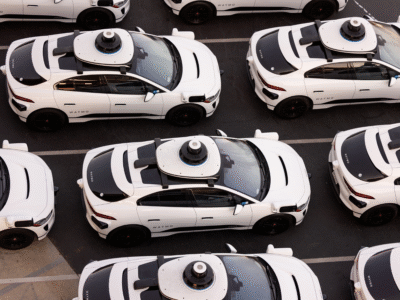
Robotaxis and automated driving features are rapidly becoming a reality on city streets. While an SUV with spinning rooftop sensors may seem futuristic, the physical danger of a crash remains real. If an automated vehicle strikes you, a legal injury claim requires a different approach than a standard fender bender. Our New York City car accident lawyers at Wingate, Russotti, Shapiro, Moses & Halperin, LLP can explain your options.
To determine fault for NYC self-driving car accidents, we must look far beyond the driver’s seat. Vehicle manufacturers, tech developers, and human safety operators may all share liability. As an injured motorist, pedestrian, or cyclist, you need to know how to protect your physical and financial well-being. Contact us at (212) 986-7353 for a free case evaluation.
Who Is Liable in NYC Self-Driving Car Accidents?
When a human motorist hits you, that person usually takes the blame. Autonomous vehicles destroy that simple equation. If a test vehicle strikes you in a crosswalk, investigators must uncover who or what caused the collision. Financial responsibility could fall on several potentially liable parties: the human behind the wheel, the corporation testing the software, or the engineers who designed the rooftop sensors.
Currently, New York City does not allow driverless commercial robotaxis to pick up passengers without a human present. Any tech company testing an automated vehicle must keep a trained safety operator in the driver’s seat. If the human operator fails to take control of the vehicle to prevent a crash, both the operator and the employer of the tech company share direct responsibility for any resulting physical injuries.
When a software failure causes the collision rather than human error, liability shifts toward the tech company. If you were injured in a robotaxi accident, NYC authorities will retrieve the vehicle’s onboard computer data to determine whether a human or the computer controlled the steering wheel at the moment of impact. Product liability laws allow you to sue the manufacturer if a defective radar sensor or a malfunctioning brake system caused the crash.
What Are the Proposed Changes to New York Self-Driving Car Laws?
State and local regulations restrict how autonomous vehicles operate on public roads. Tech firms cannot drop a fleet of computer-driven cars into midtown traffic without warning. The state requires aggressive oversight, and local authorities enforce additional layers of consumer protection.
To operate legally in New York City, a tech company must file an application with the Department of Transportation (NYC DOT) for a permit to demonstrate or test autonomous vehicles. This permit process requires developers to demonstrate that their technology is safe. Statewide, the New York State Department of Motor Vehicles requires that companies hold an autonomous vehicle technology demonstration and testing permit before mapping state roadways.
As technology evolves, regulations are constantly changing. While the five boroughs maintain a ban on driverless commercial services, legislators recently debated proposed New York self-driving car laws that would soon allow limited commercial robotaxi pilots in smaller upstate cities. Tech giants continually lobby to loosen restrictive rules. As automated fleets expand, so does the risk of an autonomous vehicle accident.
What Insurance Applies After an Automated Crash?
Insurance policy limits determine how much compensation you can recover after a severe injury. A standard personal auto policy barely covers a brief hospital stay. Fortunately, the insurance requirements for autonomous testing companies far exceed those of regular commuters.
Under city rules, a corporation running automated test vehicles must carry massive commercial coverage. The regulations require proof of at least $5 million in automobile insurance, with a minimum of $3 million in personal liability (covering bodily injury) and $2 million in property damage. If you suffer catastrophic injuries, the corporation responsible has the financial resources to compensate you fully.
New York follows a no-fault auto insurance system. If a car hits you while you are walking or bicycling, the vehicle’s no-fault policy pays for your initial medical bills and a portion of your lost wages, regardless of fault. Our self-driving car accident attorneys in NYC can handle the initial claim while simultaneously constructing a third-party lawsuit against the tech company’s commercial policy for severe pain and suffering.
What Evidence Do You Need After a Crash?
Physical evidence can vanish quickly on busy city streets. To win your case, you need hard proof of what went wrong. Unlike a standard car accident case that relies heavily on eyewitness accounts, an automated-vehicle crash claim centers on raw digital evidence.
Self-driving cars function much like mobile surveillance units. They capture high-definition video from various perspectives, monitor speed with incredible precision, and document every instance of braking. This accumulation of data creates an impartial account of what happened in the crash. Authorities in New York and your legal team will want access to this telemetry information right away.
Tech companies claim these logs contain proprietary trade secrets and fiercely protect the data. You need a legal advocate who knows how to force these corporations to hand over the footage and sensor logs. Securing footage from nearby security cameras, collecting witness contact information, and photographing the vehicle’s final resting place are also vital steps in building a bulletproof case.
How Can You Seek Justice for Your Injuries in New York?
Going up against a multibillion-dollar tech company requires substantial financial resources and an aggressive courtroom strategy. These corporations employ large legal teams whose job is to destroy your claim and minimize your payout. If an automated vehicle caused your injuries, you need an advocate who understands the nuances of self-driving car accidents in NYC.
Do not let an automated vehicle crash derail your financial future. At Wingate, Russotti, Shapiro, Moses & Halperin, LLP, we know how to secure telemetry data, decode complex liability structures, and hold negligent tech giants fully accountable for your injuries. Reach out at (212) 986-7353 for a free consultation today and let us help you pursue the maximum compensation.
FAQs About Self-Driving Cars
Who gets the ticket if a robotaxi runs a red light?
If a driverless car runs a red light or makes an illegal turn, local law enforcement does not penalize the passenger. The tech company operating the vehicle is held accountable for the traffic violation. The officer issues a notice of noncompliance directly to the corporation.
Can self-driving cars operate safely in severe winter weather?
Heavy rain or snow can create blind spots for automated driving systems. Thick snowfall can scramble the laser sensors mounted on the roof, and water droplets can block camera lenses. As autonomous computers lack the human instinct to feel tires losing grip on black ice, safety protocols usually force the vehicle to pull over or drastically reduce speed during a storm. If a sudden blizzard hits New York, tech companies will remotely ground the entire fleet until the roads clear.