
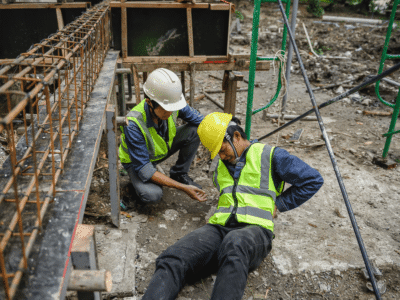
Construction sites in New York City are rapidly evolving, with cutting-edge technology offering new ways to prevent injuries and save lives. One of the most promising advancements is AI-powered safety tools. These systems are designed to detect hazards, monitor worker fatigue, and prevent falls before they happen.
But what happens when construction companies ignore these tools? If a serious accident occurs that could have been prevented with affordable and available AI, does that strengthen a worker’s legal case?
At Wingate, Russotti, Shapiro, Moses & Halperin, LLP, we believe the answer is yes. When companies neglect basic safety protocols, it can create strong grounds for a negligence claim.
The Rise of AI Safety Tech in Construction
Artificial intelligence (AI) isn’t just for tech startups or self-driving cars. It’s already being used on construction sites to reduce injuries and detect risks in real time. These systems don’t replace human safety officers—they enhance them by offering:
- Wearables that detect when a worker is overheating, overly fatigued, or in dangerous proximity to heavy equipment
- Cameras and sensors that predict structural collapses or track whether safety harnesses are being worn
- Machine learning algorithms that analyze job site data to predict accident-prone patterns
- AI monitoring platforms that issue real-time alerts for fall risks or scaffolding instability
The Duty of Care and Construction Worker Safety
New York Labor Law already imposes a strict duty of care on property owners, contractors, and site managers. Under Labor Law Sections 200, 240(1), and 241(6), employers must provide reasonable protection to workers against workplace hazards.
While these laws were written before AI existed, the principle is timeless: if a known, effective safety measure exists and it’s ignored, that decision may be considered negligence, especially if the failure leads directly to an injury.
When a construction company chooses not to implement an affordable AI system that could have prevented an accident, it may open the door to lawsuits.
How Ignoring AI Tools Could Be Used as Evidence
Let’s say a worker falls from a scaffold, and the company did not install a fall detection system or ignored recommendations to install a real-time harness alert system—something already used by similar firms on nearby job sites. In a case like this, the injured worker’s legal team could argue:
- Industry standards are evolving, and AI tools are increasingly being recognized as part of modern safety practices.
- Comparable companies are using the tech, which could prove that adopting the tool was not only reasonable but expected.
- The AI tool would likely have prevented the accident, meaning the company’s refusal to use it directly contributed to the injury.
- The cost of the system was not prohibitive, showing that this was a choice—not an unavoidable omission.
Labor Laws Protecting Workers in NYC
New York provides some of the strongest worker protections in the country. If you’re injured on a construction site, the following laws may apply:
- Labor Law § 240(1): Requires proper safety devices for workers at elevation. This is commonly used in fall injury cases.
- Labor Law § 241(6): Enforces specific safety rules from the New York Industrial Code.
- Labor Law § 200: Requires that job sites be maintained in a safe condition overall.
Ignoring AI tools could be seen as part of a larger pattern of neglect—and that’s where our legal team steps in.
Real-World Example: When Technology Could Have Prevented a Catastrophe
Consider a case where a demolition worker is struck by debris from an unstable ceiling. An AI structural monitoring system, available and used in similar buildings nearby, had the ability to detect small shifts in load-bearing walls—but was never installed.
If this worker sustains life-changing injuries, the contractor’s decision not to implement that system can be brought into the case, especially if the cost was reasonable and the risk was foreseeable.
In short, failure to adopt basic safety tech could strengthen both liability and damages arguments in court.
Evolving Safety Standards in the Construction Industry
You may hear the argument that AI safety tools are “too new” or “not industry standard.” But safety standards evolve, and the legal definition of negligence looks at what a reasonable contractor would have done.
As more firms implement smart safety tools and more municipalities embrace high-tech safety protocols, the bar is rising.
At WRSMH, we’re prepared to argue that failure to adopt available tools, especially after warnings or prior incidents, shows reckless disregard for worker safety.
How Our Attorneys Build These Cases
At Wingate, Russotti, Shapiro, Moses & Halperin, LLP, we don’t just file claims. We build trial-ready cases. When AI safety tools are relevant, we:
- Investigate what tools were available at the time of the accident
- Identify whether other firms in the area used similar tools
- Hire safety and tech experts to testify on how the AI tool works and how it would have helped
- Cross-examine contractors on why no tech was used despite foreseeable risks
Steps To Take if You’ve Been Injured on the Job
If you’ve been injured on a construction site and believe safety technology could have prevented your injury:
- Get medical attention immediately.
- Document everything you can—photos, video, witness names, site conditions.
- Report the accident to your supervisor and union, if applicable.
- Do not sign anything from the contractor or insurance company until you speak to a lawyer.
- Contact an experienced NYC construction injury attorney who understands how modern tech plays into your legal rights.
We Get Justice for Injured Construction Workers
At Wingate, Russotti, Shapiro, Moses & Halperin, LLP, we’ve been fighting on behalf of injured construction workers for more than 50 years. In fact, our firm has recovered over $2 billion for our clients.
WRSMH has been recognized among the Best Law Firms by U.S. News & World Report, and many of our attorneys have been honored by Super Lawyers, the Multi-Million Dollar Advocates Forum, and other legal rating organizations.
Speak With an Experience NYC Construction Accident Attorney Today
If you were hurt on a New York construction site, we want to hear about it. Contact Wingate, Russotti, Shapiro, Moses & Halperin, LLP, by calling (212) 986-7353 to schedule a free consultation.