
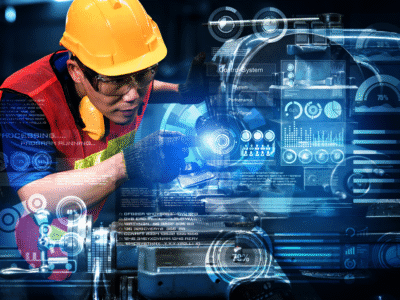
New York City’s skyline is in constant motion. From high-rise renovations in Midtown to sidewalk scaffolding in the outer boroughs, construction work never stops. But with that activity comes risk.
Despite decades of safety initiatives, construction remains one of the most dangerous industries in the city. And now, a new solution is entering the jobsite: artificial intelligence (AI).
While AI may sound futuristic, it’s already being used on construction sites to eliminate hazards, reduce human error, and prevent devastating accidents. At Wingate, Russotti, Shapiro, Moses & Halperin, LLP, we’ve seen how the latest tools can make a real difference.
One: AI Hazard Detection Cameras
Falls from heights remain the number one cause of construction fatalities in New York. AI-powered cameras, which are equipped with machine learning software, can scan active job sites for unsafe conditions and instantly alert supervisors.
How it works: These smart cameras are installed throughout a site and continuously scan for:
- Missing guardrails or unsecured edges
- Workers not wearing fall protection
- Improper ladder use or scaffolding gaps
- Pedestrians or workers walking into restricted zones
The system flags violations in real time, allowing site managers to intervene before a fall or collision happens.
Why it matters: In many of the construction hazard detection AI cases in New York, simple safety rules like tying off harnesses or blocking off a dangerous edge are ignored. These AI systems spot problems humans may miss, especially on large or complex sites.
Two: Wearable Sensors
Workers on NYC construction sites often operate in extreme temperatures or near massive moving equipment. Wearable AI-enabled sensors (often worn as vests, helmets, or wristbands) can monitor a worker’s biometrics and physical surroundings to detect imminent danger.
Key features:
- Monitors for signs of heat exhaustion or overexertion
- Detects proximity to active machinery or vehicles
- Sends alerts when a worker enters a restricted or high-risk zone
- Tracks movement patterns to identify near-misses or potential hazards
Common accidents prevented:
- Crush injuries from moving vehicles or forklifts
- Fatigue-related accidents on ladders or lifts
- Being pinned or backed over by equipment
Why it matters: Many NYC job site injuries involve heavy equipment accidents, where someone simply didn’t see or hear a truck or excavator backing up. AI wearables provide an additional layer of awareness beyond the human senses.
Three: Predictive Analytics
Using historical data, weather conditions, equipment usage stats, and even site-specific incident logs, AI can predict where and when an accident is most likely to occur.
How it works:
- Forecasting scaffolding collapse risks during windstorms
- Alerting crews when electrical circuits may be overloaded
- Identifying subcontractors with higher-than-average safety violations
- Suggesting re-sequencing of work to reduce overlap and congestion
Why it matters: At WRSMH, we often find that a site had a known issue, such as faulty wiring, unsafe sequencing, or repeated near-misses, that was never addressed. With predictive analytics, those problems can be resolved before someone gets hurt.
Four: Automated Equipment Monitoring
AI can monitor the condition of tools, lifts, cranes, and power systems. When a problem is detected, such as overheating, unusual vibrations, or performance lags, the system can automatically shut down the machine or send alerts.
Accidents that may be prevented:
- Electrocution from faulty wiring or overloaded circuits
- Crane or hoist collapse from mechanical failure
- Power tool injuries caused by poor maintenance
Why it matters: In dense NYC work zones where multiple trades operate in the same area, one failing machine can trigger a chain reaction. AI monitoring systems reduce that risk, especially on large builds or older structures with inconsistent utilities.
Five: Smart Scheduling and Workflow Optimization
AI platforms can also streamline scheduling to reduce shift overlap, eliminate overworked crews, and ensure proper rest between shifts.
Potential benefits:
- Less fatigue among night-shift and overtime workers
- Reduced confusion about who is responsible for safety monitoring
- Lower risk of mistakes from miscommunication
Accidents that could be prevented:
- Falls, cuts, and missteps from tired workers
- Improper equipment usage due to poor handoffs between teams
- Missed inspections or walkthroughs
Unsafe Construction Practices Are Not an Option
With these technologies becoming more affordable and widespread, construction firms can no longer claim ignorance or cost barriers. Ignoring available AI solutions is increasingly seen as a failure to provide a reasonably safe working environment.
Soon, courts could begin treating failure to implement basic AI safety tools the same way they treat missing guardrails or broken harnesses. That means if you’re injured on a site where AI could have prevented your injury, you may have a stronger case for negligence under New York Labor Law.
NYC Laws to Protect Construction Workers
Under Labor Law Sections 200, 240(1), and 241(6), NYC construction workers have extensive protections, even if they’re subcontractors or day laborers. These laws make property owners and general contractors legally responsible for providing safe conditions and functional safety equipment.
If AI technology could have detected or prevented your injuries, you may be entitled to compensation through a third-party injury lawsuit. That includes damages for:
- Lost income and future earnings
- Pain and suffering
- Medical expenses
- Long-term disability
Speak With a Trusted NYC Construction Accident Lawyer Today
WRSMH has successfully resolved some of the largest construction injury claims in New York City, including those involving scaffolding collapses, demolition accidents, unsafe equipment, and site management failures.
In fact, our personal injury law firm has recovered over $2 billion recovered for our clients. We’ve also been recognized among the Best Law Firms by U.S. News & World Report, and we have attorneys who belong to the exclusive Multi-Million Dollar Advocates Forum.
Speak With an Experienced NYC Construction Accident Injury Attorney
If you were seriously injured on a New York construction site, Wingate, Russotti, Shapiro, Moses & Halperin, LLP, wants to hear your story. Give our New York City construction accident lawyers a call today at (212) 986-7353 for a free consultation.